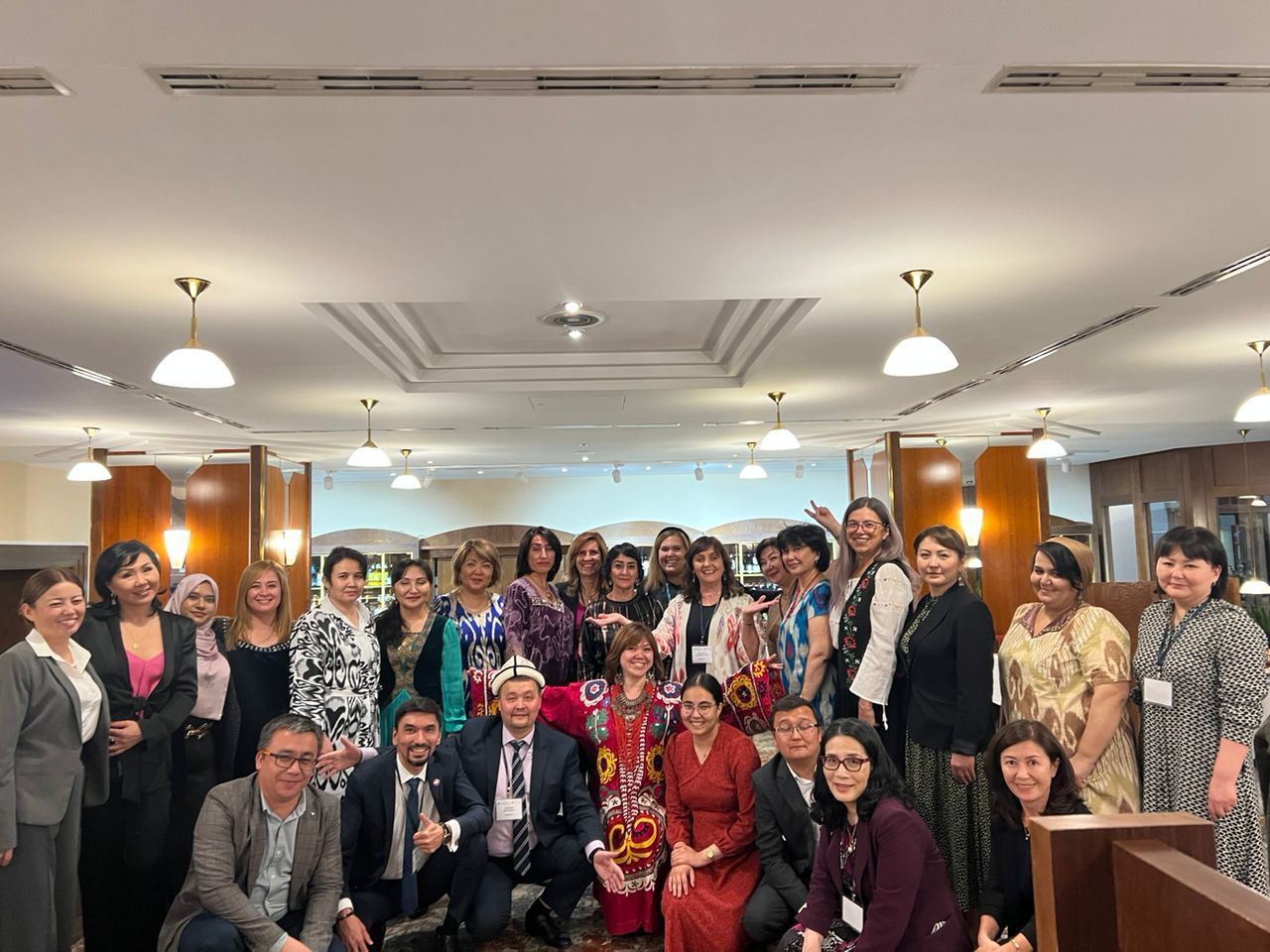
Women in Nuclear Central Asia Network (WINCA) and Black Sea Women in Nuclear Network (BSWN) participated in a technical exchange program in Vienna, Austria, organized by the James Martin Center for Nonproliferation Studies (CNS) and hosted by the Vienna Center for Disarmament and Non-Proliferation (VCDNP), with funding and support provided by the U.S DOE/NNSA Nuclear Security Women Initiative (NSW) and Los Alamos National Laboratory (LANL).
Program participants represented government bodies, training and research facilities, academia, industry, and non-governmental organizations from Central Asia and the Black Sea region. The technical exchange, held on February 11–13, combined expert briefings at the VCDNP with in‑person visits to the International Atomic Energy Agency (IAEA), the Comprehensive Test Ban Treaty Organization (CTBTO), and the TRIGA research reactor at the Atominstitut. The program aimed to introduce BSWN and WINCA to a broad range of Vienna‑based experts and organizations and to foster dialogue and professional exchange.
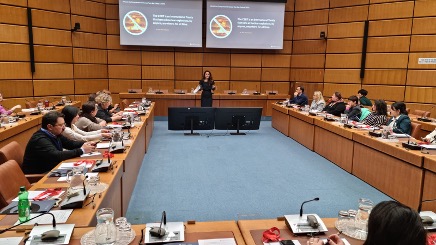
On February 11, the program opened at the VCDNP with welcoming remarks from VCDNP Executive Director Elena Sokova, Olga Martin, LANL, and Margarita Kalinina‑Pohl, CNS. Elena Sokova presented an overview of VCDNP’s mission and work, giving participants a clearer picture of the Center’s role in the international nonproliferation community. The WINCA and BSWN representatives provided brief updates on recent activities in their networks.
The first day’s program also featured a special guest, Ambassador Alison Grant, Canada’s Permanent Representative to the International Organizations in Vienna, who met with the group to discuss current priorities in nuclear nonproliferation and security from a diplomatic perspective. She spoke with participants about the role of permanent missions in multilateral processes, shared insights from Canada’s engagement with Vienna‑based organizations, and answered questions about career paths and skills that are valuable for working in international diplomacy and nuclear policy. After the meeting, the Permanent Mission of Canada in Vienna published a LinkedIn post tagging both BSWN and WINCA and briefly describing the discussion on building a strong, forward‑looking nuclear workforce and supporting peaceful uses of nuclear energy through robust nuclear security. This highly professional public acknowledgment provided valuable visibility and promotion for both networks.
The afternoon program started with a round‑table discussion that brought together representatives from international organizations and NGOs, including VCDNP, the BSWN, WINCA, the World Institute for Nuclear Security (WINS), Open Nuclear Network (ONN), and the United Nations Office for Disarmament Affairs (UNODA). The conversation centered on professional pathways in nuclear security and nonproliferation, practical challenges in the field, and opportunities for cooperation between regional networks and Vienna‑based institutions.
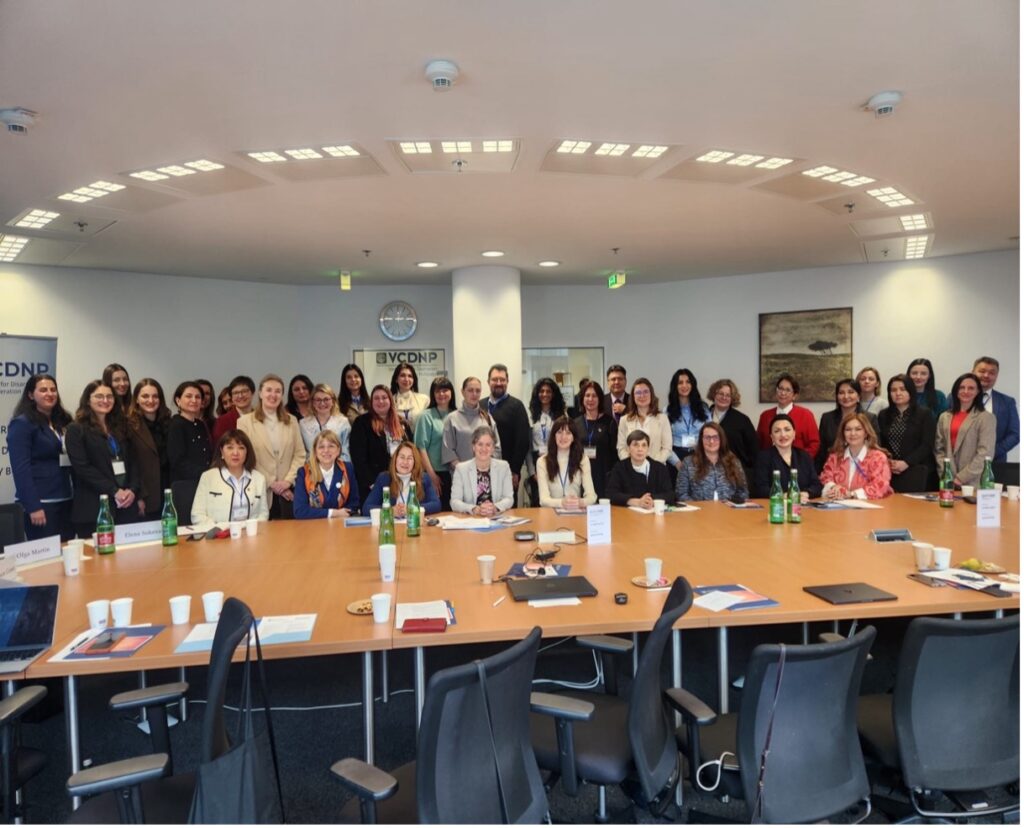
Later sessions included a presentation by Tony Stott, Senior Research Associate at VCDNP, on infrastructure development for new nuclear power programs, followed by a discussion with a representative of the Organization for Security and Co-operation in Europe (OSCE) that linked nuclear security issues to broader regional security dynamics. The meeting with the OSCE was particularly important given the organization’s active engagement in both Central Asia and Black Sea. The day concluded with a dedicated BSWN–WINCA session on future collaboration to deepen expertise and expand professional opportunities by joint events and mutual promotion.
On February 12, participants began the day with sessions led by VCDNP experts Mara Zarka, Research Associate and Project Manager, and Laura Rockwood, Senior Fellow. Mara Zarka spoke about emerging and disruptive technologies and their implications for nuclear security, highlighting the VCDNP’s ongoing projects and research in this area, illustrating how the Center approaches these issues in practice. Laura Rockwood presented on the history of the IAEA, explaining how the organization has evolved and how it supports nonproliferation and nuclear security today. The VCDNP chapter concluded with a meeting with Vienna‑based Los Alamos National Laboratory experts working on nuclear security and nonproliferation, which provided an opportunity to discuss ongoing projects and potential areas of cooperation with regional partners. The experts also shared their professional paths and key career highlights with the group. The day continued with a visit to the TRIGA Center Atominstitut, where participants toured the research reactor and related facilities, gaining practical insight into reactor operations, research applications, and training activities.
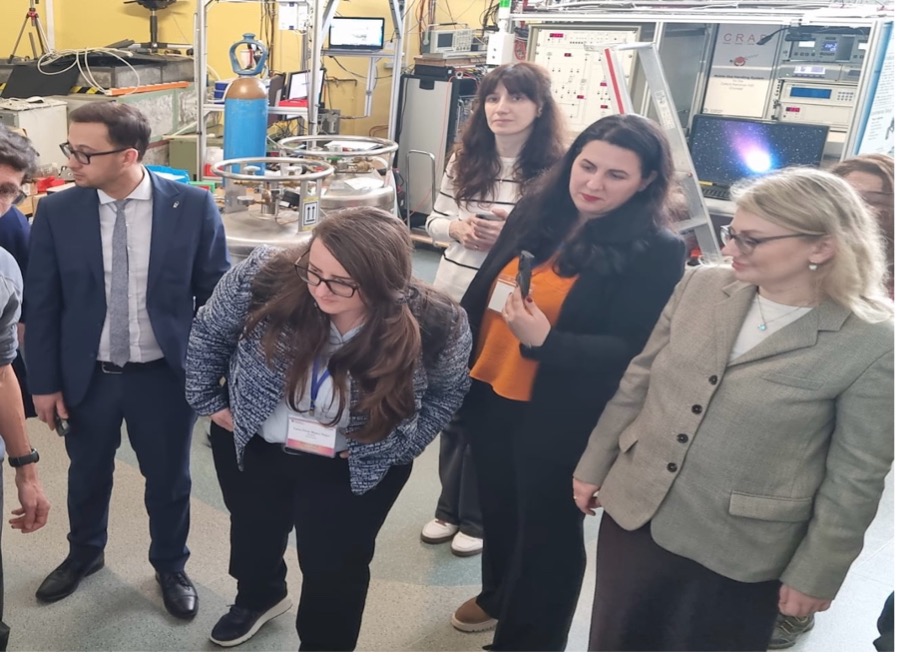
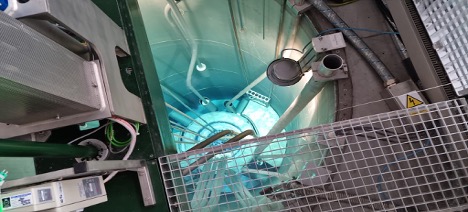
They were also able to observe the blue Cherenkov glow in the reactor pool, which was a first‑time experience for many in the group.
On the final day, the group visited the Vienna International Centre (VIC), a hub of several key international organizations working on nuclear issues. For some participants, it was their first visit to the VIC, which proved highly motivating for their career aspirations and strengthened their sense that their professional goals are achievable.
The day began with a meeting at the IAEA with representatives from the Nuclear Security Division, where participants learnt about current priorities and programs in nuclear security and how the IAEA supports Member States in this area. The group then toured the IAEA Incident and Emergency Centre (IEC), gaining insight into how the IEC serves as the global focal point for preparedness and response to nuclear and radiological incidents and emergencies.
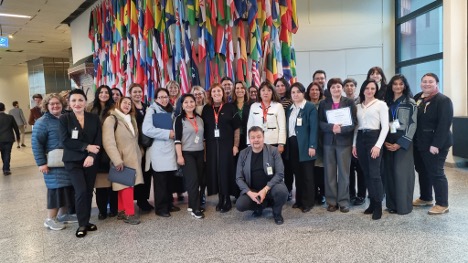
WINCA-BSWN group visit to the Vienna International Centre (VIC)
The afternoon was devoted to an extended visit to the CTBTO, where participants learned about the organization’s mandate to support the ban on nuclear test explosions and its global verification system, including the International Monitoring System and International Data Centre. This final day at the VIC allowed participants to connect their earlier discussions in Vienna with the work of two central institutions in international nuclear security and verification architecture.
The technical visit to Vienna not only offered participants a rare opportunity to meet leading experts, visit international organizations, and tour a research reactor, it also created space for fostering personal connections. Through formal sessions and informal conversations, participants were able to exchange ideas, share practical experiences from their countries and institutions, and identify areas for future joint projects. Spending several days together strengthened professional relationships within and between the networks and helped lay the groundwork for continued collaboration beyond the visit.
***
Below, please see testimonials by participants (original style and grammar were preserved, but some content was edited for confidentiality and brevity)
“The meetings at VCDNP and the presentations of the experts from IAEA, CTBTO, LANL, VCDNP helped me better understand current issues in nuclear security and nonproliferation, as well as how international organizations approach these challenges in practice… As a representative of a technical support organization, I discussed with BSWN colleagues the national challenges and approaches, and what can be improved or upgraded.” (Participant from Kazakhstan)
***
“The involvement of different generations of specialists, including students, is a strong feature of the event. For a group of Ukrainians from different cities, it is extremely important to feel that they have a worthy place in the network and support to continue working in the field of nuclear energy and non-proliferation in Ukraine… It is thanks to such meetings that it is possible to continue communication with long-standing partners from Georgia and Central Asia, with whom we have many similar areas of work. American leadership and support in this networking is evident and highly effective.” (Participant from Ukraine)
***
“For many women experts from Central Asia, access to the Vienna professional environment, direct dialogue with IAEA, CTBTO, VCDNP, and other institutions is not something that happens routinely… I am sincerely grateful to the U.S. Department of Energy/ National Nuclear Security Administration (DOE NNSA) Office of International Nuclear Security/Nuclear Security Women Program and Los Alamos National Laboratory for making this possible. Their support is not symbolic – it has a direct and measurable impact on capacity-building and long-term resilience in our region. (Participant from Kyrgyzstan)
***
“Key sessions on nuclear infrastructure development, emerging technologies’ effects on security, IAEA history, and OSCE insights provided actionable strategies for enhancing project risk management, compliance, and safety protocols. The TRIGA reactor tour was a standout, offering hands-on understanding of reactor operations… Personally, it reinforced my commitment to advancing in nuclear security.” (Participant from Romania)
***
“As a specialist working in the field of strategic trade control and international security, this trip to Vienna was not merely a professional visit for me, but an experience that set important directions for the future. Visiting the International Atomic Energy Agency was, without exaggeration, the culmination of the trip. The IAEA is not an abstract institution described in international law textbooks. It is a real, functioning mechanism of control, monitoring, and support for the peaceful use of nuclear energy… For the first time, I witnessed how the global security architecture operates from the inside — not in theory, but in practice. This experience is both inspiring and strengthening in terms of responsibility for developing national control mechanisms and building human capacity. Thank you for this experience — it has truly become an important milestone in my professional development.” (Participant from Kyrgyzstan)
***
“Technical tours like these are invaluable for professional growth. Thanks to them, I not only significantly broaden my horizons but also update my professional competencies. Throughout the technical tour, we have direct communication with colleagues and experts from the host companies. This provides an opportunity to significantly expand the scope of activities of the association I work for, as well as establish new business contacts.” All the sites visited during the technical tour provided a strong motivational impetus for further professional work, as they provided clear examples of successful and effective work in the industry. Of course, I would like to especially commend the invited speakers for their high level of competence, charisma, practical experience, and informative presentations, which overall facilitated a constructive professional dialogue. (Participant from Kazakhstan)
***
“The opportunity provided became a significant milestone in my professional development in the field of radiation and nuclear science. The exchange of experience with international experts, discussions on modern approaches to ensuring radiation and nuclear safety, and participation in professional dialogue contributed to deepening my knowledge and expanding scientific and international cooperation.” (Participant from Uzbekistan)
***
“The meetings and discussions provided important insight into current trends in this field and broadened my professional perspective. I especially appreciated the opportunity to engage with experts and colleagues, exchange ideas, and discuss potential avenues for further cooperation. This visit significantly contributed to my professional growth and strengthened my motivation to continue developing my work in this area.” Once again, thank you for this opportunity and for your support. I sincerely hope that our collaboration will continue in the future.”(Participant from Uzbekistan)
***
“The opportunity to engage with high-level experts from VCDNP, IAEA, and CTBTO provided me with a broader perspective on the evolution of non-proliferation and the impact of emerging disruptive technologies on reactor safety. Technically, the visits to the TRIGA reactor at the Atominstitut and the CTBTO were particularly rewarding; seeing the practical application of verification and monitoring technologies reinforced my commitment to maintaining the highest standards in chemical control and system integrity within my own organization… I returned with the insight that our local operational excellence is part of a much larger, interconnected global effort to ensure nuclear security, and I am eager to apply these international best practices to foster a stronger safety culture in the Black Sea region.” (Participant from Romania)
***
“On a personal level, I found myself recognizing in their enthusiasm the same excitement I felt when I was offered my first international opportunities. These experiences shape confidence, broaden perspective, and strengthen commitment to the field. I am grateful that we were able to offer this to our colleagues, and I am confident that the effects will continue to unfold in the months ahead.” (Participant from Romania)
***
“I dare say this technical visit changed my perspective. I saw my professional path with new eyes. We visited three significant international organizations whose work is so important for the nuclear industry and for all of humanity. I felt at one with a large community of intelligent, professional, and interesting people who, with open hearts, sincerely and generously shared with us their knowledge, problems, and prospects for the development of nuclear energy, disarmament, and non-proliferation.”(Participant from Kazakhstan)
***
“Thank you for the opportunity that you provide to the network participants. Not only meeting and discussing work, but also getting to know other organizations, their work, and women who occupy a worthy place and make a great contribution to the nuclear industry. I really liked that the participants of the meeting were both professionals with vast experience in our industry, and young girls who are starting their careers.” (Participant from Ukraine)
***
“These meetings create a solid foundation for further cooperation, new initiatives, and future professional discussions…This visit was particularly useful, as it provided us with important information on online training formats and digital opportunities that could be implemented for both our course participants and instructors.” (Participant from Ukraine)
***
“The visit to the TRIGA reactor left an unforgettable impression. It was my first experience seeing an operating reactor from such a close distance. During my student years and afterwards, I had read a great deal about Cherenkov radiation, and it was truly a special and memorable experience to witness it with my own eyes. The tours of the IAEA and the CTBTO once again reinforced my understanding of the tremendous work these organizations do and how important it is for small countries to maintain strong connections with them. Considering Georgia’s geographical location and complex historical background, I clearly see how essential it is to implement and disseminate their knowledge and experience in our country, especially in the field of handling radioactive materials.” (Participant from Georgia)
***
“I was very interested and satisfied with the results and the approaches used by colleagues from other states of BSWN and colleagues from the WINCA network…The visits to the Vienna Atomic Institute and the VIC have considerably enriched the information and general experience of the participating experts, as well as broadened the vision of the challenges and areas of interest of the national coordinators and experts from both networks. I believe that the continuation of the exchange of experience and information programs is very useful and contributes to the cohesion of the expert teams from different states of the BSWN and WINCA networks.” (Participant from Moldova)
This report was prepared by Dr. Valeriia Gergiieva, BSWN Vice-President, with the additional input provided by Margarita Kalinina-Pohl and Nomsa Ndongwe